
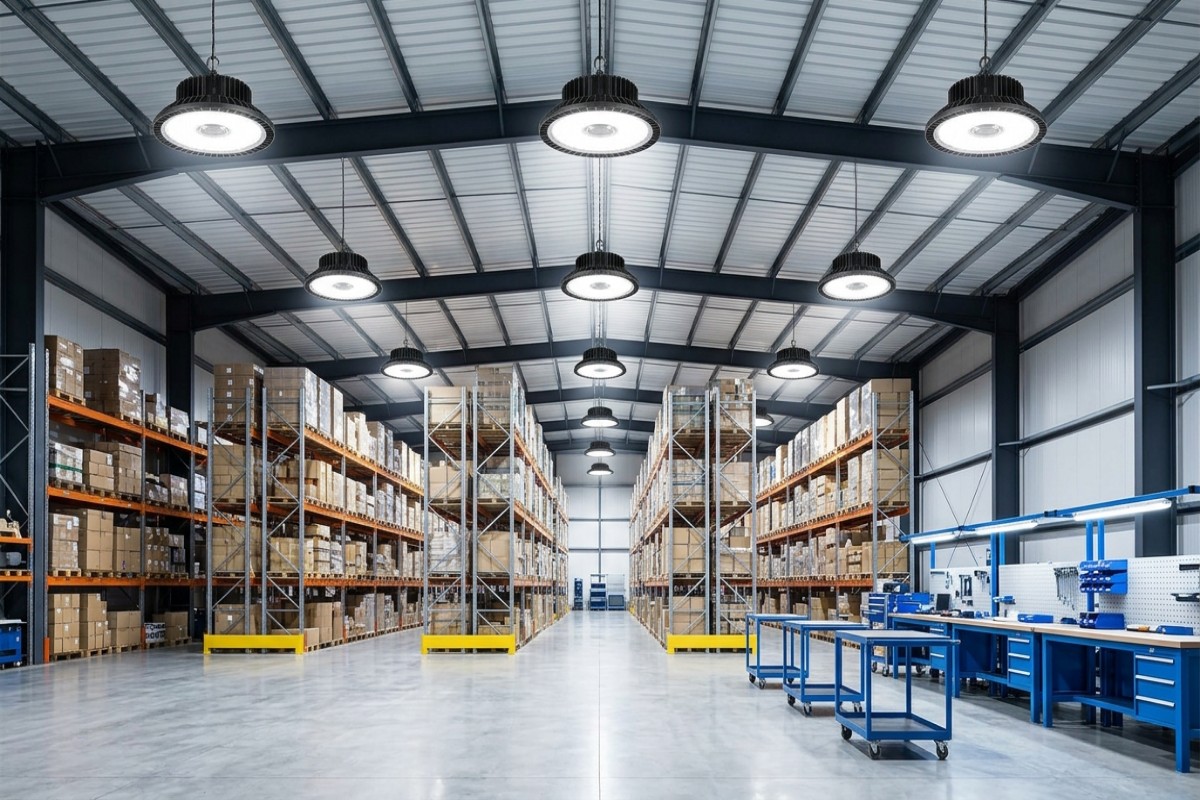
LED Canopy Lights provide bright and reliable lighting for covered outdoor and commercial areas. Businesses use them in parking garages, gas station canopies, building entrances, loading areas, walkways, and drive-through spaces.

These lights combine a compact design with efficient LED technology. As a result, they can provide strong illumination while helping businesses manage energy use and maintenance needs.
For commercial properties, good lighting matters every day. It can improve visibility, support a cleaner property appearance, and create a more comfortable environment for customers, employees, and visitors. Therefore, choosing the right lighting fixture is an important part of any commercial lighting project.
What Are LED Canopy Lights?
LED Canopy Lights are overhead fixtures made for areas with a ceiling, canopy, or covered structure. They usually have a slim design. This allows them to sit close to the mounting surface.
Unlike older lighting systems, LED fixtures use light-emitting diodes instead of traditional lamps. This design offers several benefits. For example, LED technology can provide efficient light output and a long operating life.
You can find Led Canopy Lights in different wattages and sizes. They also come with different lumen outputs and color temperatures. Because of this, businesses can choose a fixture based on the size and purpose of their space.
Where Can LED Canopy Lights Be Used?
LED canopy lighting works well in many commercial locations. In fact, these fixtures can support both indoor and outdoor covered areas.
Common applications include:
- Parking garages
- Gas station canopies
- Commercial entrances
- Covered walkways
- Drive-through areas
- Loading docks
- Warehouse entrances
- Apartment parking areas
- Retail properties
- Service stations
- Transit facilities
- Covered work areas
- Commercial parking structures
Each location has different lighting needs. For this reason, you should consider the size of the area, mounting height, and required brightness before selecting a fixture.
Main Benefits of LED Canopy Lights
Energy Efficient Performance
LED technology uses electricity efficiently. Therefore, LED Canopy Lights can help businesses manage energy consumption.
This benefit becomes more useful when a property has many fixtures. It can also matter when lights operate for long hours each day.
However, energy savings depend on several factors. These include the existing lighting system, operating schedule, electricity rates, and selected LED fixture.
For the best result, compare the power consumption and light output of your current fixtures with modern LED options.
Long Operating Life
LED lights can operate for a long period before replacement becomes necessary. This can reduce the need for frequent lamp changes.
The benefit is even more noticeable when fixtures sit high above the ground. For example, replacing a light inside a parking garage can require equipment and additional labor.
With a long-lasting LED fixture, maintenance teams may need fewer replacement visits. As a result, property owners can spend less time managing routine lighting work.
Always check the manufacturer’s rated lifespan and warranty before purchasing.
Bright and Consistent Lighting
A good canopy lighting system should provide consistent illumination. Dark areas can make a space feel less comfortable. On the other hand, excessive brightness can create glare.
LED Canopy Lights come with different light distribution patterns. Therefore, you can select an option that matches your property’s layout.
Fixture placement also matters. The right spacing can help distribute light across the entire area. It can also reduce unnecessary overlap between fixtures.
Before installation, consider the mounting height, fixture spacing, lumen output, and light distribution.
Low Maintenance Needs
Maintenance is an important concern for commercial properties. Lighting fixtures may be installed in places that are difficult to reach.
LED Canopy Lights can reduce routine maintenance because they do not require frequent traditional lamp replacement. This can save time for maintenance teams.
In addition, fewer replacement requirements can help reduce interruptions to normal business activities.
For properties with many fixtures, this advantage can become even more valuable over time.
Compact and Modern Design
Many LED Canopy Lights feature a low-profile design. Therefore, they can fit neatly beneath ceilings and covered structures.
The compact appearance works well with modern commercial buildings. It also keeps the ceiling area looking clean and organized.
A well-designed lighting system can improve both function and appearance. For this reason, businesses should consider the fixture’s design as well as its technical specifications.
Outdoor-Friendly Options
Many canopy fixtures are designed for outdoor or semi-outdoor use. Depending on the model, they may include weather-resistant housings and protection against dust or moisture.
However, not every LED fixture is suitable for outdoor installation. Always check the product specifications before installation.
The fixture’s environmental and ingress protection rating should match the conditions of the installation area.
How to Choose the Right LED Canopy Lights
Choosing a canopy light should involve more than looking at the wattage. Several factors can affect lighting performance.
Check the Lumen Output
Lumens indicate the amount of visible light produced by a fixture. Therefore, they provide a better comparison than wattage alone.
A fixture with higher wattage does not always provide the best result. Instead, look at the balance between power consumption and lumen output.
The correct lumen level depends on the area size, ceiling height, fixture spacing, and desired brightness.
Choose the Right Color Temperature
Color temperature affects how the light looks. LED Canopy Lights are available in several color temperatures.
Cooler white light can create a crisp and bright appearance. Neutral white can provide a balanced look.
The right choice depends on the property and the atmosphere you want to create. Also, using a similar color temperature across nearby fixtures can create a more consistent appearance.
Consider Light Distribution
Light distribution determines how the fixture spreads illumination. This factor can affect the number of fixtures you need.
A narrow area may require a different distribution pattern than a large parking structure. Therefore, review the fixture’s optical design before making a purchase.
Good distribution can help reduce dark spots. It can also prevent excessive light from being concentrated in one area.
Review Mounting Options
Before buying an LED Canopy Light, check its mounting requirements.
Some fixtures use surface mounting. Others may work with junction boxes or specific mounting systems.
Measure the available space first. Then, compare the dimensions and mounting requirements of the fixture.
A proper fit can make installation easier. It can also help ensure that the fixture remains secure.
Check the Environmental Rating
Outdoor and semi-outdoor areas can expose fixtures to moisture, dust, heat, and temperature changes.
Therefore, the environmental rating matters. Check the manufacturer’s specifications before installation.
If a fixture will face regular exposure to weather, choose a model designed for those conditions.
LED Canopy Lights for Parking Garages
Parking garages need dependable lighting throughout driving lanes and pedestrian areas. Poor lighting can create dark spots and make the space feel less comfortable.
LED Canopy Lights can provide overhead illumination while maintaining a low-profile appearance.
When planning a parking garage lighting upgrade, consider the ceiling height first. Then, review fixture spacing, lumen output, and light distribution.
You should also consider the existing electrical system. A professional assessment can help determine whether the current infrastructure can support the planned upgrade.
Lighting controls can also be useful. For example, occupancy sensors may adjust lighting based on activity in suitable areas.
LED Canopy Lights for Commercial Entrances
A building entrance should have clear and balanced lighting. The entrance is often one of the first areas customers and visitors see.
LED Canopy Lights can illuminate covered entrances and walkways without creating a bulky appearance.
When selecting fixtures for an entrance, consider both function and design. The lighting should provide enough visibility while avoiding unnecessary glare.
A consistent lighting layout can also make the property look more organized.
LED Canopy Lights for Gas Station Canopies
Gas station canopies require strong overhead lighting. The fixtures must illuminate a large covered area while operating for extended periods.
LED Canopy Lights can provide consistent illumination across the canopy. They also offer a clean and modern appearance.
When choosing fixtures for this application, consider lumen output, light distribution, mounting requirements, and environmental protection.
Energy efficiency can also be important because canopy lights may operate for many hours each day.
Installation Tips for LED Canopy Lights
Proper installation helps your lighting system perform as expected. Before installation, check the electrical requirements of the selected fixture.
Next, inspect the mounting surface. Make sure it can support the fixture and mounting hardware.
Also, follow the manufacturer’s installation instructions. Electrical work should meet applicable local requirements. Where required, use a qualified electrical professional.
After installation, check the lighting pattern. Look for dark areas, excessive glare, or uneven brightness.
If necessary, adjust fixture placement or spacing to improve coverage.
Maintaining LED Canopy Lighting
LED Canopy Lights require relatively little routine maintenance. Still, regular inspections can help identify problems early.
Check fixtures for dirt, physical damage, loose components, or signs of moisture. Clean the fixture when needed according to the manufacturer’s instructions.
Also, inspect the mounting hardware from time to time. A secure fixture supports reliable operation.
For larger properties, create a simple maintenance schedule. This makes it easier to monitor multiple fixtures and address issues before they become larger problems.
Combining LED Canopy Lights With Other LED Products
A commercial property may require more than one type of lighting. Therefore, businesses can combine LED Canopy Lights with other fixtures.
For example, LED Wall Pack Lights can illuminate exterior walls and entrances. LED Flood Lights can provide wider area lighting. LED Shoebox Lights can support parking lots, while LED High Bay Lights can illuminate warehouses.
Using suitable fixtures in different areas can create a complete lighting plan.
It can also help maintain a consistent appearance across the property.
Why Upgrade to LED Canopy Lights?
Older lighting systems can require more maintenance and may use more electricity. An LED upgrade can provide an opportunity to improve efficiency and lighting performance.
LED Canopy Lights also offer a modern design. Their compact size makes them suitable for many covered structures.
In addition, long operating life can reduce the frequency of fixture replacement. This can be especially useful for businesses that manage large commercial properties.
However, the right fixture depends on the application. Before upgrading, review your existing lighting system and identify areas that need improvement.
Final Thoughts
LED Canopy Lights are a practical option for commercial and covered outdoor lighting. They can provide bright illumination for parking garages, gas station canopies, entrances, loading areas, walkways, and many other locations.
Their efficient LED technology, compact design, long operating life, and low maintenance needs make them useful for modern commercial properties.
Before choosing a fixture, compare lumen output, wattage, color temperature, light distribution, mounting requirements, and environmental ratings. Also, consider the size and layout of the installation area.
With careful planning, LED Canopy Lights can help create a bright, consistent, and professional lighting environment. They can also support efficient operation and make routine lighting maintenance easier for businesses and property managers.