
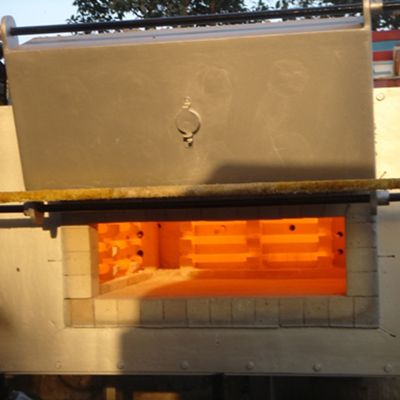
Metal components work hard. They face pressure, friction, heat, impact, vibration, and sometimes all of these challenges at the same time. To help such components become stronger, harder, and more resistant to wear, manufacturers often use controlled heat-treatment processes. A Hardening Furnace is an important part of this process because it provides the controlled heating required before the metal is cooled using a suitable method.

At first glance, a furnace may look like a giant industrial oven. The major difference is that nobody wants to bake cookies inside this one. Instead, it is designed to deliver accurate, uniform, and repeatable heating for demanding manufacturing applications.
What Is a Hardening Furnace?
An Industrial Hardening Furnace is industrial heating equipment used to heat metal components to a specified temperature as part of a hardening or heat-treatment process. The material is heated and held at the required temperature for a specific period before being cooled through an appropriate method.
This controlled process changes the internal structure of the metal and can improve important properties such as hardness, strength, toughness, and resistance to wear. These properties are especially valuable for components that operate under demanding mechanical conditions.
Different metals require different treatment temperatures, heating rates, holding times, and cooling methods. Therefore, furnace settings should always be selected according to the material specification and the desired final properties.
How Does a Metal Hardening Furnace Work?
The hardening process generally involves three important stages: heating, soaking, and cooling.
First, components are placed inside the furnace and heated gradually. The temperature is increased according to the required process cycle. Once the target temperature is reached, the components remain at that temperature for a specific period. This stage is commonly known as soaking.
Soaking allows heat to penetrate the components more evenly and helps the material reach the required condition before cooling.
The next step is controlled cooling or quenching. Depending on the material, component design, and required properties, cooling may be performed using water, oil, polymer solutions, air, or another suitable cooling medium.
The complete process requires careful control. Heating too quickly, selecting an unsuitable temperature, holding the components for an incorrect period, or applying an inappropriate cooling method can affect the final properties.
In other words, metal hardening is not simply a matter of making something hot and then making it cold. The entire temperature cycle matters.
Why Is a Hardening Furnace Important?
Manufacturers need metal components that can perform reliably under demanding working conditions. Gears, shafts, tools, pins, dies, bearings, and various machine parts may require improved hardness and wear resistance.
A Industrial Hardening Furnace provides a controlled environment for the heating stage of the treatment process. Accurate temperature control and consistent heat distribution help manufacturers achieve repeatable results from one batch to another.
Consistency is particularly important in production environments. If one batch receives different heating conditions from another, the final hardness and performance can vary. This may result in rejected components, additional processing, production delays, and the kind of paperwork nobody enjoys.
A properly selected furnace can therefore support both product quality and production efficiency.
Important Features of Industrial Furnace Systems
When selecting industrial heating equipment, temperature capability is only one consideration. A reliable Hardening Furnace should also provide good temperature uniformity, effective insulation, dependable controls, and suitable chamber construction.
Modern furnace systems may include digital temperature controllers, programmable heating cycles, safety systems, robust heating elements, insulated chambers, temperature sensors, and automatic control arrangements.
The heating method can also vary depending on the application. Electric heating is commonly selected where precise temperature control and clean operation are important. Fuel-fired systems may be suitable for certain large-scale industrial applications where high heating capacity is required.
The right configuration depends on several factors, including component size, production quantity, operating temperature, material type, batch weight, available space, and required heat-treatment cycle.
A furnace designed for small precision components may be very different from one designed for large and heavy industrial parts. Bigger is not automatically better; the equipment needs to match the job.
Temperature Control Makes a Difference
Temperature control is one of the most important factors in heat treatment. Even a relatively small temperature variation can influence the final result when processing sensitive materials.
A properly designed Industrial Hardening Furnace helps maintain the required temperature throughout the working chamber. Good insulation can also reduce unnecessary heat loss and support more efficient operation.
Temperature uniformity is particularly important when several components are processed in the same batch. If some parts receive significantly more heat than others, the resulting material properties may not be consistent.
Manufacturers should also avoid overloading the chamber. Excessive loading can interfere with heat circulation and may prevent components from receiving uniform heating. Following the recommended loading arrangement can help maintain better temperature distribution.
In simple terms, give the components enough room to get properly heated. Even metal parts appreciate personal space.
Applications of Hardening Furnaces
A Hardening Furnace can be used in several industries where metal components require controlled heat treatment. Common applications include engineering, automotive manufacturing, tool production, machinery manufacturing, construction equipment production, and general metalworking.
Typical components may include gears, shafts, machine tools, fasteners, dies, pins, rollers, bearings, and other parts that require greater hardness or improved wear resistance.
The exact process varies according to the material and application. Carbon steel, alloy steel, tool steel, and other engineering materials may require different treatment temperatures and cooling methods.
For example, a component designed to withstand repeated friction may require a heat-treatment cycle that improves its resistance to surface wear. Another component may require a different treatment to achieve an appropriate balance between hardness and toughness.
For this reason, manufacturers should develop the process according to established material specifications instead of using the same furnace cycle for every component.
Benefits of Using a Hardening Furnace
One of the major benefits of a Hardening Furnace is process control. Instead of relying on inconsistent heating conditions, manufacturers can establish a defined temperature cycle and repeat it for different batches.
Controlled heating can help support consistent material properties when the furnace is correctly designed, operated, and maintained. It can also make production processes easier to monitor because temperature settings and heating cycles can be documented.
Another benefit is flexibility. Depending on the furnace design, manufacturers can process different sizes and types of components by selecting suitable temperature programs and loading arrangements.
Modern control systems can further simplify operation by allowing operators to program temperature profiles and monitor the process.
Better process consistency can also reduce unnecessary rework. When components receive the correct treatment cycle, manufacturers can improve the chances of achieving the desired results without repeating the entire process.
Of course, the furnace cannot do everything by itself. Correct material selection, loading, process parameters, quenching, inspection, and operator training all remain important.
Safety and Maintenance
High-temperature industrial equipment requires proper operation and maintenance. Operators should be trained to use the equipment and should follow the manufacturer’s instructions and workplace safety procedures.
Regular inspection of heating elements, insulation, electrical connections, temperature sensors, doors, seals, control panels, and other critical components can help identify potential issues early.
A Hardening Furnace should also have appropriate safety features to help protect operators and equipment. Depending on the design, these may include temperature alarms, emergency controls, door interlocks, over-temperature protection, and other protective systems.
Maintenance is not something that should be postponed until the furnace stops working. Preventive maintenance can help identify worn components before they become larger problems.
Good maintenance can improve reliability, support consistent heating performance, and help reduce unexpected downtime. After all, production schedules rarely appreciate surprise furnace problems.
Choosing the Right Furnace
Selecting a Hardening Furnace requires more than simply choosing the largest or hottest model available. The equipment should match the actual production requirements.
Manufacturers should consider the type of material being processed, required operating temperature, component dimensions, batch weight, production volume, heating method, temperature accuracy, available floor space, and required process cycle.
The chamber size is another important factor. A chamber that is too small can restrict production, while an unnecessarily large chamber may consume more energy than required for the application.
The heating arrangement should also be selected according to the process. Electric furnaces can offer precise control for many applications, while fuel-fired equipment can provide suitable heating capacity for particular industrial requirements.
visit our website for more detail Meta therm furnace private limited